Thrush Font: Wild Design for Editorial Projects
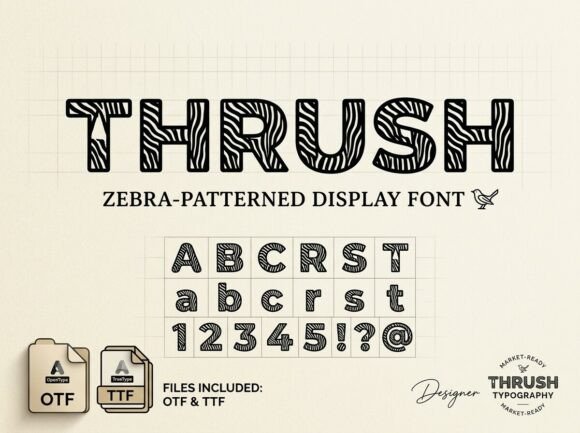
As I sat down to redesign the header for a lifestyle blog, the right font felt like the missing piece of the puzzle. After testing several options, I landed on Thrush—a bold, rounded sans-serif display font that exudes a sense of movement and energy. It wasn’t just about style; it was about finding a typeface that could elevate the entire editorial mood while maintaining clarity and readability.
Thrush for Lifestyle Blog Headers and Cover Designs
Thrush brings a natural rhythm to any layout, making it ideal for lifestyle blogs where visual storytelling is key. Its rounded edges and dynamic weight variations create a friendly yet professional tone, perfect for headers that need to catch attention without overwhelming the reader. When used for a blog cover, Thrush adds a sense of movement, as if the text itself is in motion, echoing the energy of the savannah it’s inspired by.
For a recent redesign, I paired Thrush with a clean serif font for body copy, allowing the display font to shine in headlines and subheadings. The contrast created a strong visual hierarchy, guiding the reader through the content while keeping the design cohesive and modern.
Thrush for Recipe Ebooks and Printable Guides
When working on a recipe ebook, I found that Thrush worked well for chapter titles and pull quotes. Its boldness made it stand out without being too aggressive, which is essential when balancing readability with visual impact. For printable guides, such as a seasonal cooking planner, Thrush added a playful yet polished feel, reinforcing the brand identity of the publication.
One challenge I encountered was using Thrush for longer text blocks. While it’s a premium font with excellent character spacing, it lacks the fine-tuned details needed for extended reading. That’s why I recommend reserving it for headings, section dividers, or decorative accents rather than body text.
Thrush for Wedding Guides and Branding Materials
In a wedding guide project, Thrush became the go-to font for title pages and section headers. Its rounded shapes gave the design a warm, inviting feel, aligning perfectly with the romantic and elegant tone of the content. Whether used for a digital brochure or a printed booklet, Thrush added a sense of sophistication without feeling too rigid.
For branding materials like invitations or stationery, Thrush’s unique character made it stand out. It worked well alongside a minimalist logo design, offering a balance between creativity and professionalism. The font’s versatility allowed it to adapt to different formats, from social media graphics to packaging design.
Thrush for Newsletter Graphics and Social Media Posts
When designing a newsletter header, I experimented with Thrush in a few different weights. The lighter versions worked well for subheadings, while the bolder styles were perfect for eye-catching headlines. Its clean lines and smooth curves made it easy to read on both screen and print, ensuring consistency across all platforms.
On social media, Thrush proved to be an effective tool for creating engaging visuals. Whether used for a post title or a callout, it added a touch of personality without overshadowing the message. Pairing it with a simple sans-serif font for captions helped maintain a balanced look, making the content more approachable and readable.
Thrush for Editorial Layouts and Content Branding
In an editorial feature page, Thrush served as the primary display font for article titles and pull quotes. Its bold, rounded form gave the layout a modern and energetic feel, while its legibility ensured that the text remained clear even at smaller sizes. This made it a great choice for content that needed to grab attention quickly, such as a trending topic or a featured story.
For content branding, Thrush offered a distinctive voice that could help differentiate a publication from others. Whether used in a magazine layout or a course PDF, it provided a consistent visual language that reinforced the brand’s identity. Its ability to work across multiple formats made it a valuable addition to any designer’s toolkit.